



Agency Worker Regulations

Gain a clear, practical understanding of the Agency Workers Regulations, including key terms, responsibilities, information requirements, compliance risks, and best practice across the supply chain. Ideal for agencies, hirers, and intermediaries.
£18.00
ex. VAT

This course provides a complete, practical introduction to the Agency Workers Regulations (AWR) and how they apply in real supply-chain arrangements. It is designed to give learners a clear understanding of why the regulations exist, how responsibilities are divided between hirers, agencies and intermediaries, and what good compliance looks like in day-to-day practice.

You’ll begin by exploring the background to AWR, including why it was introduced and the key terminology that underpins the legislation. The course then moves into a detailed breakdown of responsibilities across the supply chain, explaining what each party must provide, when information must be issued, and how liability can shift depending on the circumstances of an assignment.

Learners will also examine the importance of transparent information sharing, including scale rates, standardised upfront information, and the deadlines for Day 1, 12-week and extended-assignment disclosures.

The course then focuses on breaches and remedies, offering a practical look at how indemnities work, the potential consequences of non-compliance, and what workers can do to access the information they’re entitled to. You’ll also explore enforcement, how long workers have to bring a claim, and what best practice looks like for agencies, hirers and intermediaries.

Additional modules cover FCSA’s approach to annual AWR checks and the anti-avoidance rules designed to prevent manipulation of qualifying periods.

By the end of the course, learners will have a grounded, confident understanding of the regulations, how to apply them in real-world situations, and where to find trusted resources for ongoing compliance.

Course Details

Course Overview

Module 1: Introduction & Background

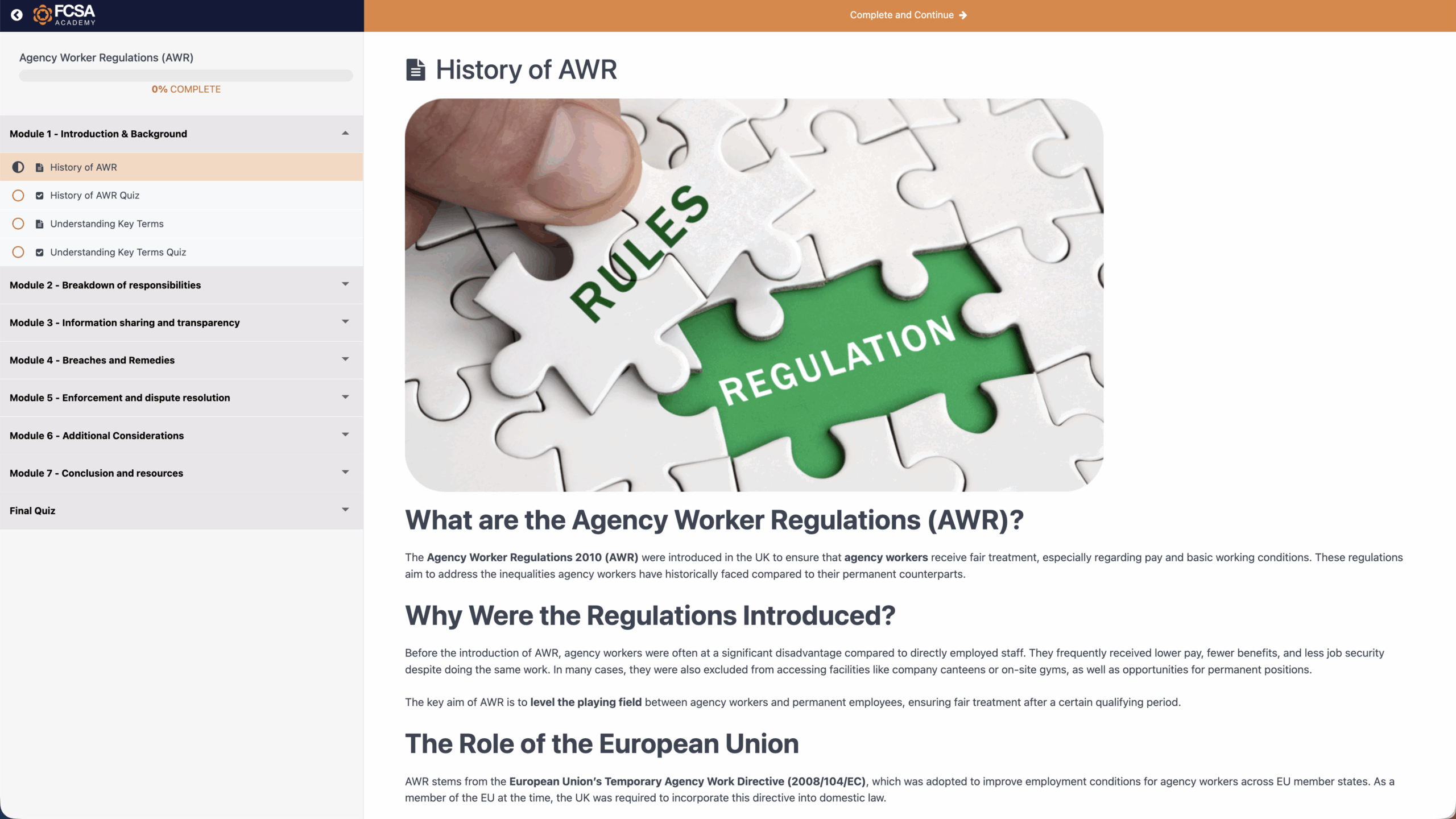
    • History of AWR: This section will delve into the year the AWR was implemented and the reasoning behind its creation. It will explain how the AWR aims to address the historical imbalance in rights between agency workers and directly employed staff.
    • Understanding Key Terms: We’ll define crucial terms like “agency worker,” “hirer,” “temporary work agency (TWA),” “assignment,” and “qualifying period” to ensure everyone is on the same page.

Module 2: Breakdown of Responsibilities

    • End Client (Hirer): This section will explore the responsibilities of the hirer, including providing access to relevant facilities (canteen, toilets. etc.), basic working and employment conditions (pay, hours, breaks, holidays), and timely information about vacancies to agency workers who qualify for equal treatment.
    • Agency (TWA): We’ll discuss the agency’s obligations, such as supplying accurate information about assignments upfront (including pay rates and duration), ensuring compliance with AWR throughout the assignment, and acting as a conduit for communication between the hirer and agency worker.
    • Intermediary (Optional): If intermediaries (such as umbrella companies) are involved in the supply chain, their responsibilities under the AWR will be clarified.
    • Transfer of Liability: This section will explain how liability for breaches of AWR can shift between the hirer and agency and intermediary (if any) depending on the specific circumstances.

Module 3: Information Sharing and Transparency

    • Blanket Approach Information Upfront: We’ll explore the concept of providing agency workers with a standardised set of information upfront, regardless of the specific assignment. This could include details on basic terms and conditions, pay scales, and dispute resolution procedures.
    • Scale Rates/Bands: This section will discuss the use of pay scales or bands for agency workers, ensuring transparency and consistency in pay offered for similar roles.
    • Timescales for Providing Information: We’ll delve into the specific timescales mandated by AWR for providing different types of information to agency workers. This will cover pre-assignment information, Day 1 information, 12-week information, and updates for extended assignments.

Module 4: Addressing Breaches and Remedies

    • Indemnities: We’ll discuss the role of indemnities in contracts between intermediaries, agencies and hirers, exploring how they can be used to manage potential financial liabilities arising from AWR breaches.
    • Potential Impact for Breaching AWR: This section will outline the potential consequences for employers and agencies who fail to comply with AWR. These consequences can include legal action, financial penalties, reputational damage, and loss of trust from workers and clients.
    • What Can the Contractor Do to Get Information Faster?: We’ll provide guidance on how agency workers can take proactive steps to obtain information they are entitled to under AWR, including raising concerns with the agency and utilising relevant complaint channels.

Module 5: Enforcement and Dispute Resolution

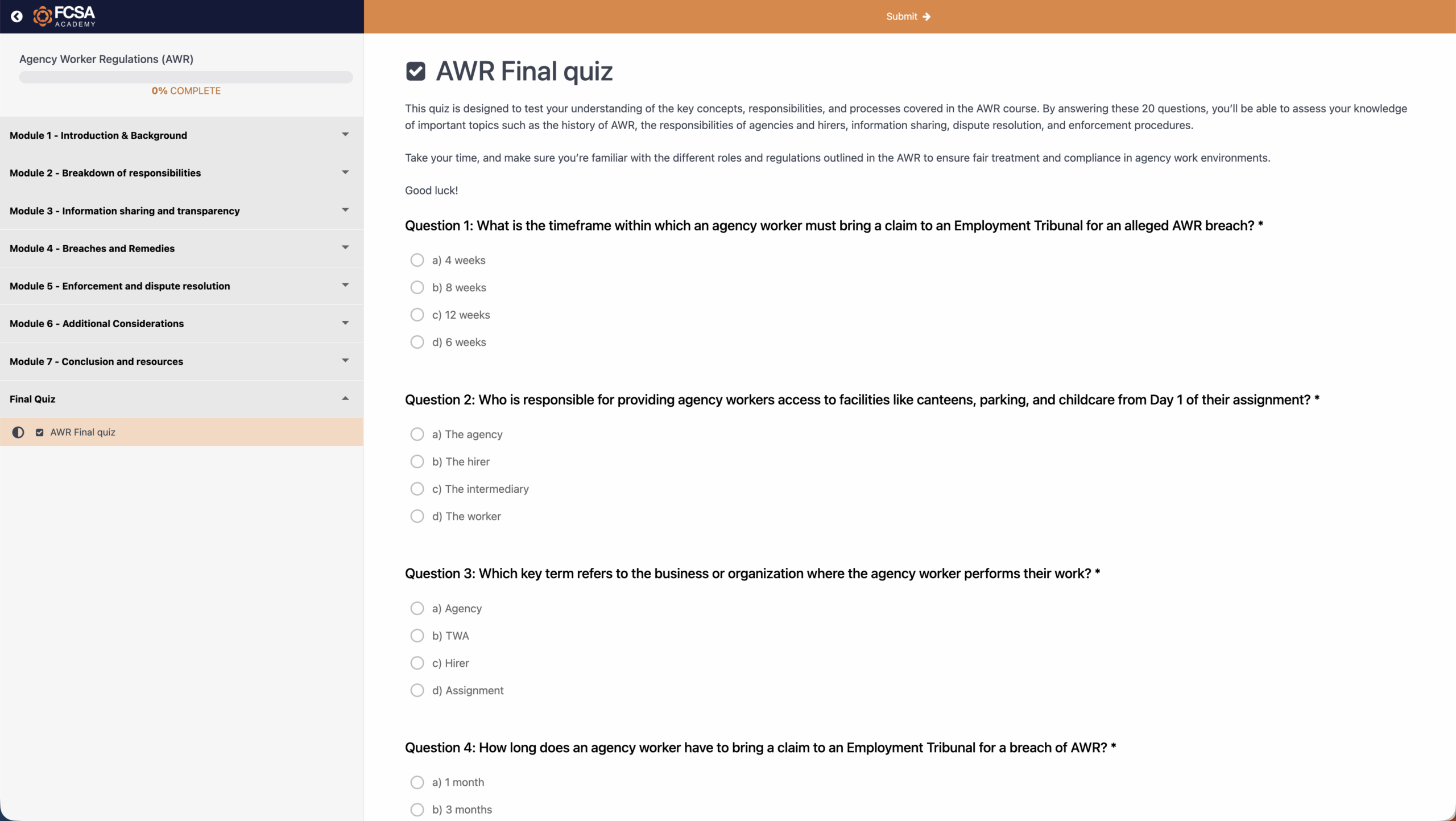
    • Length of Time to Bring a Case: This section will clarify the timeframe within which agency workers can bring a claim to an employment tribunal if they believe their AWR rights have been breached.
    • What Does Good Practice Look Like?: We’ll explore best practices for all parties involved (hirers, agencies, intermediaries and agency workers) to ensure compliance with AWR and foster a fair and transparent working environment. This will include practical examples of clear communication, proactive information sharing, and efficient dispute resolution processes.

Module 6: Additional Considerations

    • Use of FCSA Codes for Annual Checks: How the FCSA assess AWR compliance.
    • Anti-Avoidance Measures: This section will explore how the anti-avoidance provisions within AWR are designed to prevent practices aimed at circumventing the regulations and denying agency workers their rights after a certain period.

Module 7: Conclusion and Resources

    • Summary and Key Takeaways: This section will provide a comprehensive overview of the key points covered in the course.
    • Additional Resources: Participants will be provided with a list of helpful resources for further information on AWR, including government guidance and relevant websites.

Other recommended courses

Agency Worker Regulations

Gain a clear, practical understanding of the Agency Workers Regulations, including key terms, responsibilities, information requirements, compliance risks, and best practice across the supply chain. Ideal for agencies, hirers, and intermediaries.

National Minimum Wage

Getting NMW right isn't just about paying the right rate. Deductions for tools, uniforms, or accommodation; incorrectly structured holiday pay; and underpaid assignment rates can all push a worker's effective hourly rate below the legal minimum — even when the headline figure looks compliant. In a sector where workers move between assignments and payroll providers frequently, gaps in compliance can go unnoticed until HMRC comes knocking.